
Coach K
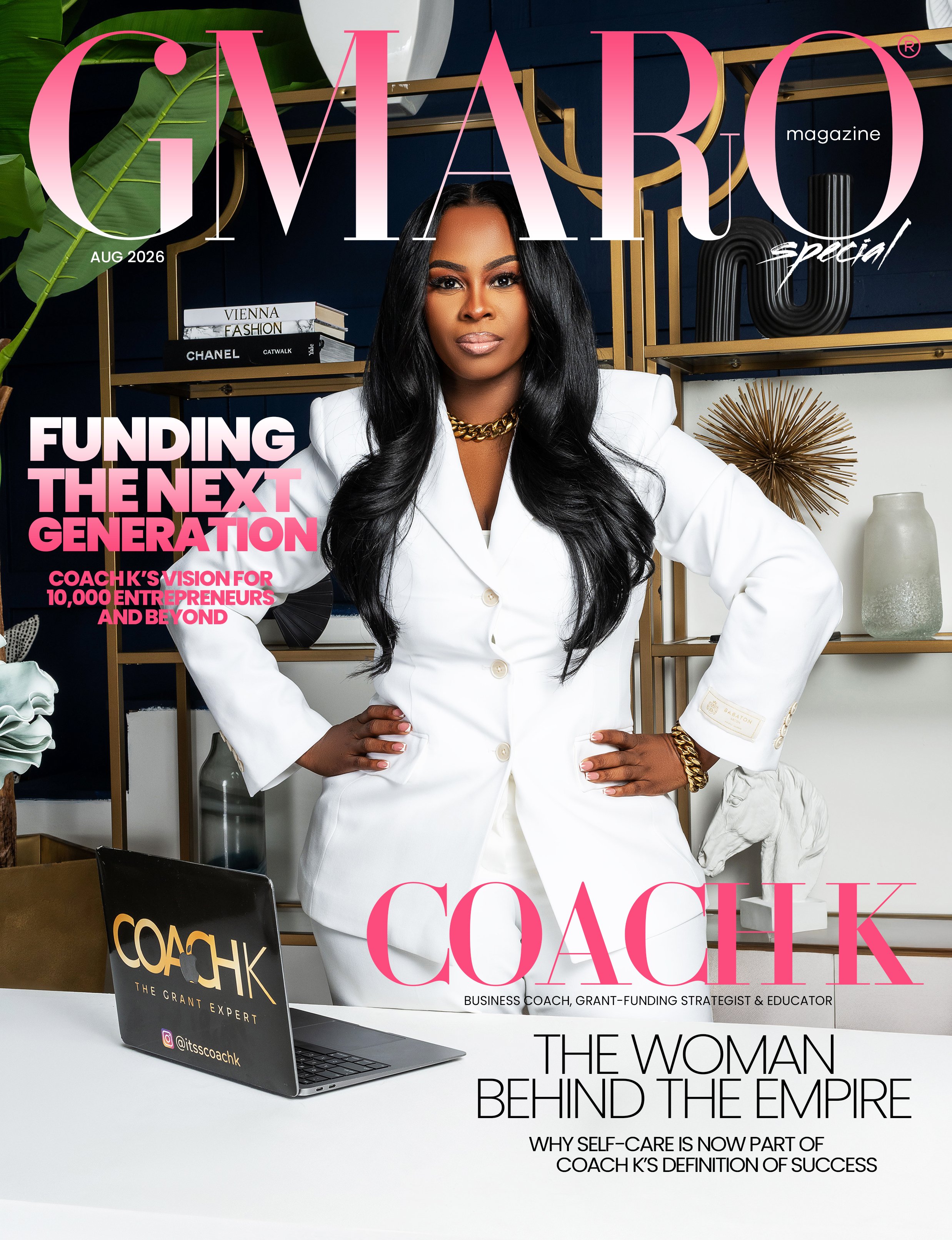
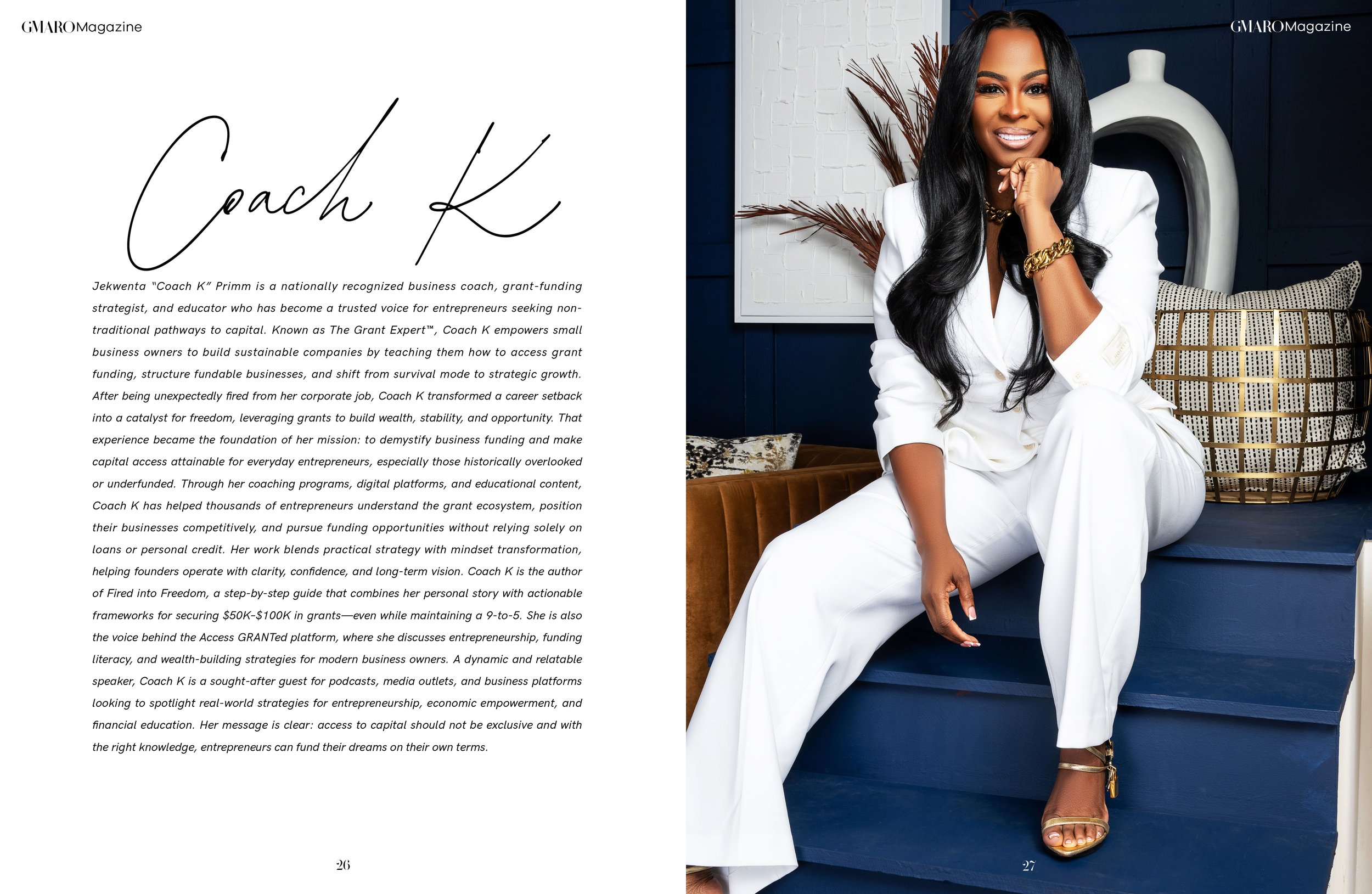
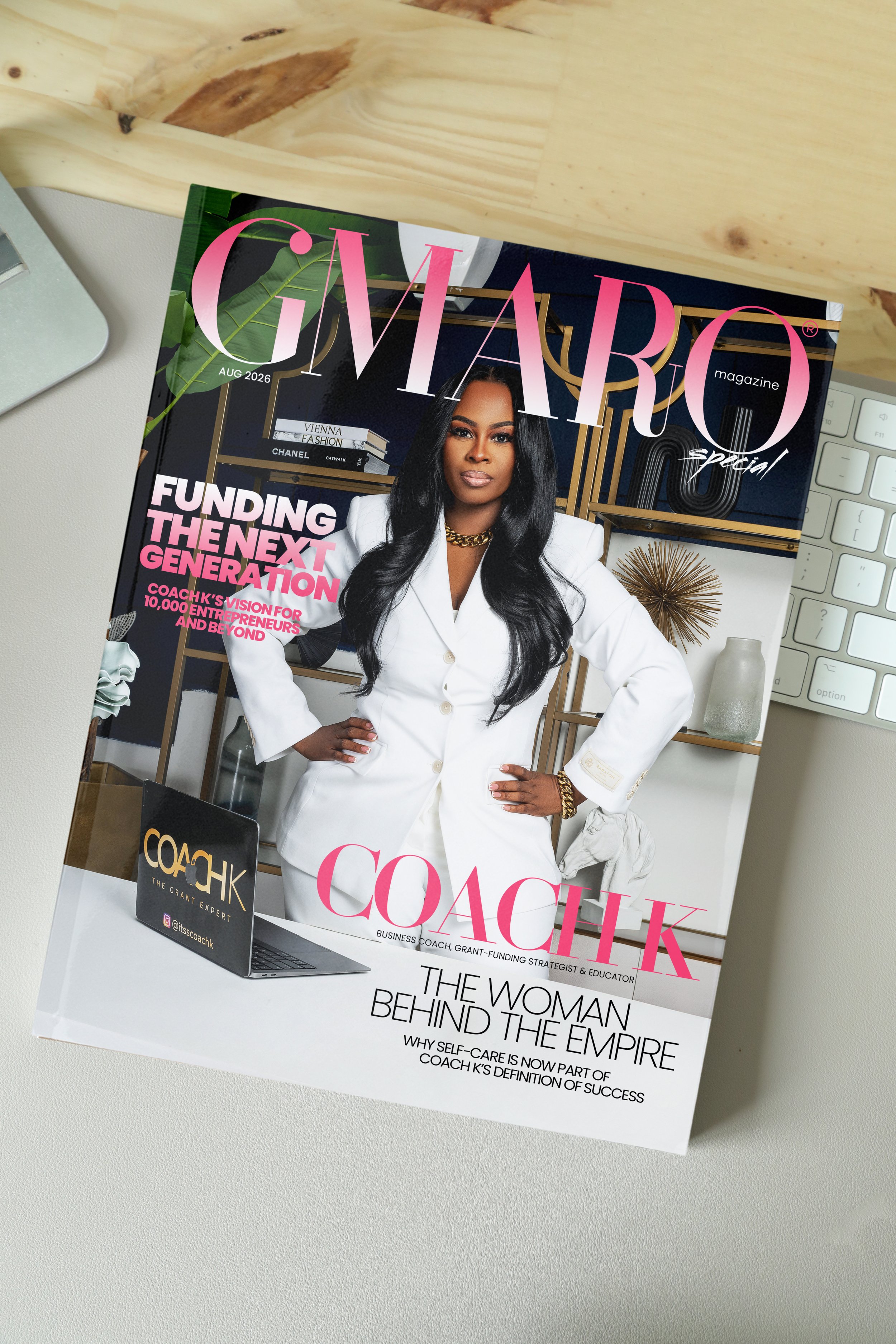
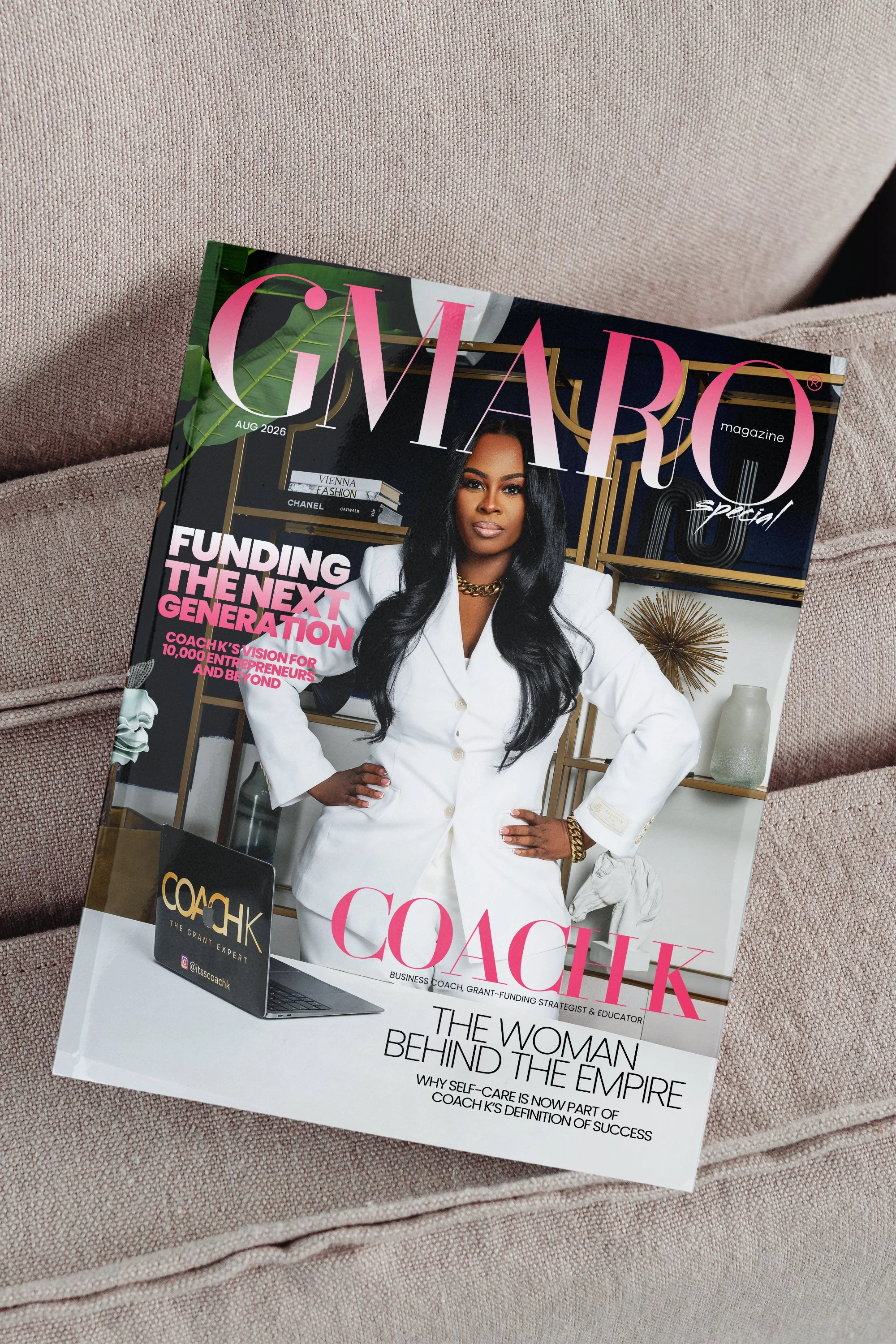
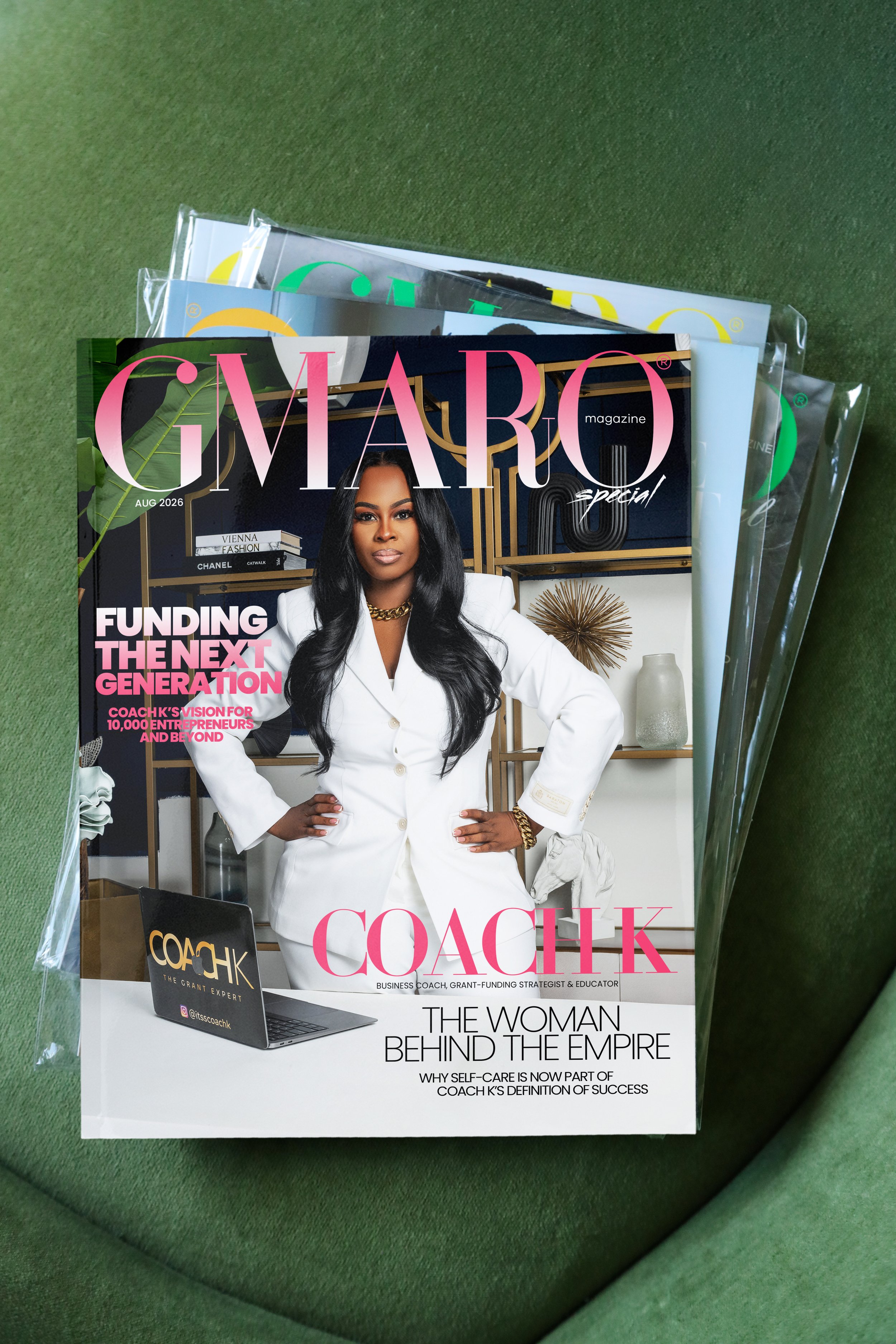
For GMARO Magazine Special Edition Vol. 52 August 2026, we spotlight Jekwenta “Coach K” Primm, a nationally recognized business coach, grant-funding strategist, educator, and the force behind The Grant Expert™.
Coach K’s story is one of transformation, resilience, and purpose. After unexpectedly losing her corporate job, she chose to turn uncertainty into opportunity, using her experience in banking and business funding to build a new path centered on financial education and entrepreneurial empowerment. What began as a personal turning point ultimately became a mission to help others gain greater control over their financial futures.
Today, Coach K helps entrepreneurs understand how to structure fundable businesses, identify grant opportunities, and approach capital with greater strategy and confidence. Through her coaching programs, educational content, and digital platforms, she has guided thousands of business owners toward funding opportunities that extend beyond traditional loans and personal credit.
Her philosophy goes beyond simply finding money. It is about helping entrepreneurs move from survival mode into sustainable growth, build stronger financial foundations, and develop the mindset required to create long-term opportunity.
Coach K is also the author of Fired into Freedom, where she combines her personal journey with practical frameworks for pursuing significant grant funding while building a business. Through her Access GRANTed platform, she continues the conversation around entrepreneurship, funding literacy, wealth building, and economic empowerment.
Her message is both practical and powerful: access to capital should not feel reserved for a select few. With education, preparation, and the right strategy, entrepreneurs can position themselves to fund their ambitions on their own terms.
GMARO Magazine is proud to feature Coach K in our August 2026 Special Edition Vol. 52, celebrating a woman who transformed a career setback into a platform for knowledge, opportunity, and financial freedom.
——————————————
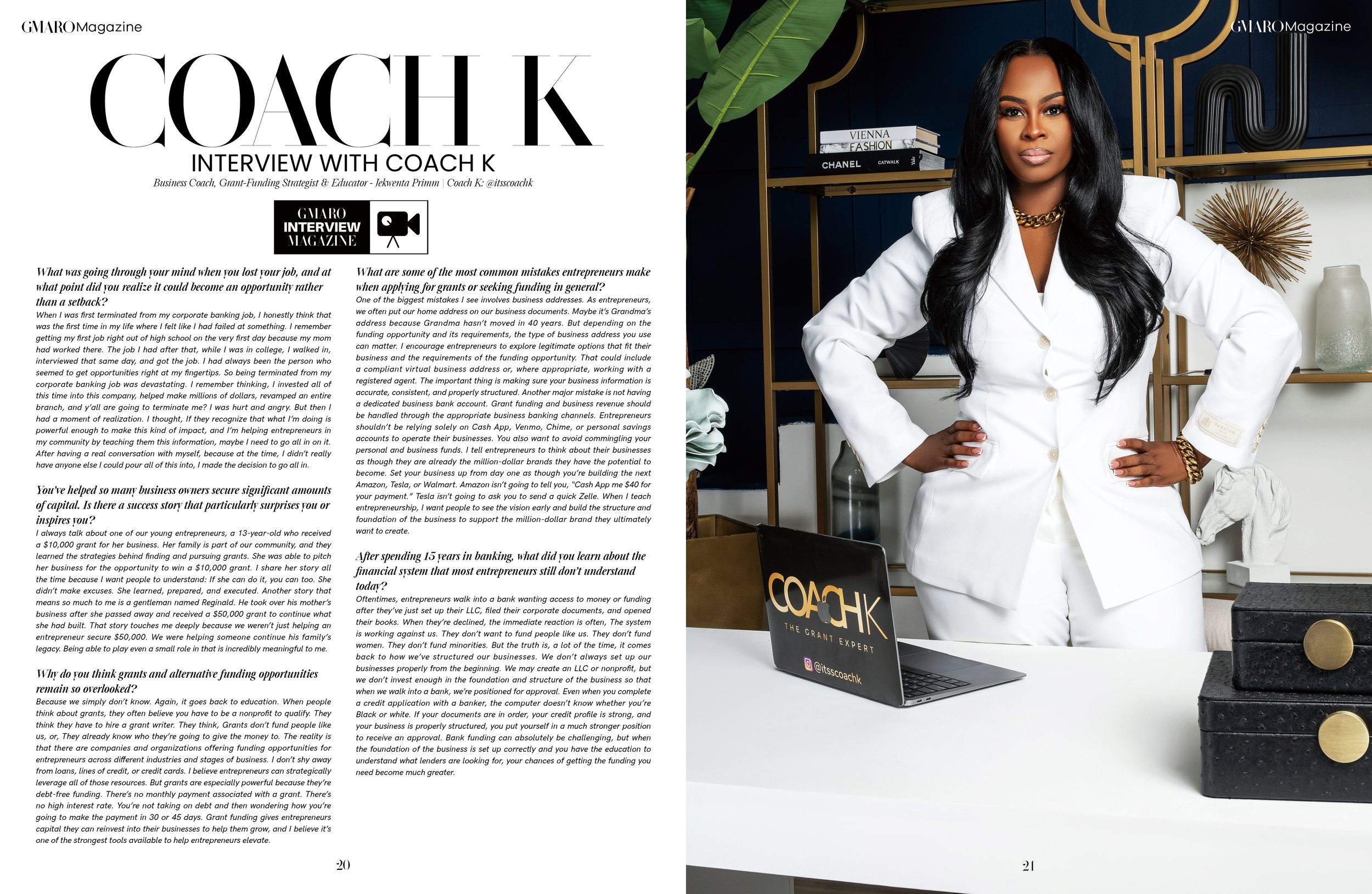
Business Coach, Grant-Funding Strategist & Educator - Jekwenta Primm | Coach K: @itsscoachk
What was going through your mind when you lost your job, and at what point did you realize it could become an opportunity rather than a setback?
When I was first terminated from my corporate banking job, I honestly think that was the first time in my life where I felt like I had failed at something. I remember getting my first job right out of high school on the very first day because my mom had worked there. The job I had after that, while I was in college, I walked in, interviewed that same day, and got the job. I had always been the person who seemed to get opportunities right at my fingertips. So being terminated from my corporate banking job was devastating. I remember thinking, I invested all of this time into this company, helped make millions of dollars, revamped an entire branch, and y’all are going to terminate me? I was hurt and angry. But then I had a moment of realization. I thought, If they recognize that what I’m doing is powerful enough to make this kind of impact, and I’m helping entrepreneurs in my community by teaching them this information, maybe I need to go all in on it. After having a real conversation with myself, because at the time, I didn’t really have anyone else I could pour all of this into, I made the decision to go all in.

You’ve helped so many business owners secure significant amounts of capital. Is there a success story that particularly surprises you or inspires you?
I always talk about one of our young entrepreneurs, a 13-year-old who received a $10,000 grant for her business. Her family is part of our community, and they learned the strategies behind finding and pursuing grants. She was able to pitch her business for the opportunity to win a $10,000 grant. I share her story all the time because I want people to understand: If she can do it, you can too. She didn’t make excuses. She learned, prepared, and executed. Another story that means so much to me is a gentleman named Reginald. He took over his mother’s business after she passed away and received a $50,000 grant to continue what she had built. That story touches me deeply because we weren’t just helping an entrepreneur secure $50,000. We were helping someone continue his family’s legacy. Being able to play even a small role in that is incredibly meaningful to me.
Why do you think grants and alternative funding opportunities remain so overlooked?
Because we simply don’t know. Again, it goes back to education. When people think about grants, they often believe you have to be a nonprofit to qualify. They think they have to hire a grant writer. They think, Grants don’t fund people like us, or, They already know who they’re going to give the money to. The reality is that there are companies and organizations offering funding opportunities for entrepreneurs across different industries and stages of business. I don’t shy away from loans, lines of credit, or credit cards. I believe entrepreneurs can strategically leverage all of those resources. But grants are especially powerful because they’re debt-free funding. There’s no monthly payment associated with a grant. There’s no high interest rate. You’re not taking on debt and then wondering how you’re going to make the payment in 30 or 45 days. Grant funding gives entrepreneurs capital they can reinvest into their businesses to help them grow, and I believe it’s one of the strongest tools available to help entrepreneurs elevate.
What are some of the most common mistakes entrepreneurs make when applying for grants or seeking funding in general?
One of the biggest mistakes I see involves business addresses. As entrepreneurs, we often put our home address on our business documents. Maybe it’s Grandma’s address because Grandma hasn’t moved in 40 years. But depending on the funding opportunity and its requirements, the type of business address you use can matter. I encourage entrepreneurs to explore legitimate options that fit their business and the requirements of the funding opportunity. That could include a compliant virtual business address or, where appropriate, working with a registered agent. The important thing is making sure your business information is accurate, consistent, and properly structured. Another major mistake is not having a dedicated business bank account. Grant funding and business revenue should be handled through the appropriate business banking channels. Entrepreneurs shouldn’t be relying solely on Cash App, Venmo, Chime, or personal savings accounts to operate their businesses. You also want to avoid commingling your personal and business funds. I tell entrepreneurs to think about their businesses as though they are already the million-dollar brands they have the potential to become. Set your business up from day one as though you’re building the next Amazon, Tesla, or Walmart. Amazon isn’t going to tell you, “Cash App me $40 for your payment.” Tesla isn’t going to ask you to send a quick Zelle. When I teach entrepreneurship, I want people to see the vision early and build the structure and foundation of the business to support the million-dollar brand they ultimately want to create.

After spending 15 years in banking, what did you learn about the financial system that most entrepreneurs still don’t understand today?
Oftentimes, entrepreneurs walk into a bank wanting access to money or funding after they’ve just set up their LLC, filed their corporate documents, and opened their books. When they’re declined, the immediate reaction is often, The system is working against us. They don’t want to fund people like us. They don’t fund women. They don’t fund minorities. But the truth is, a lot of the time, it comes back to how we’ve structured our businesses. We don’t always set up our businesses properly from the beginning. We may create an LLC or nonprofit, but we don’t invest enough in the foundation and structure of the business so that when we walk into a bank, we’re positioned for approval. Even when you complete a credit application with a banker, the computer doesn’t know whether you’re Black or white. If your documents are in order, your credit profile is strong, and your business is properly structured, you put yourself in a much stronger position to receive an approval. Bank funding can absolutely be challenging, but when the foundation of the business is set up correctly and you have the education to understand what lenders are looking for, your chances of getting the funding you need become much greater.
In your opinion, what is the most valuable financial lesson every entrepreneur should learn early in their journey?
OPM: other people’s money. All day long. Not understanding how to strategically leverage capital was one of the biggest mistakes I made in my own business. Even though I worked in banking, when I first started my childcare center, I still made financial mistakes. I maxed out credit cards. I emptied my savings account. I even took out a home equity line of credit on my personal home, and I nearly lost that home to foreclosure. If I had truly understood the value of strategically leveraging other sources of capital, including grant funding, it could have saved me from a lot of financial hardship. One thing I believe every entrepreneur has in common is that, at some point, we need money. It doesn’t matter whether you’re brand-new or already generating six or seven figures. Eventually, an opportunity will come along where you say, I need more money to do X, Y, and Z. That’s why entrepreneurs need to understand how to strategically leverage funding sources. That might mean bank financing, a business credit card, investors, partnerships, or grant funding—depending on the business and its financial position. Instead of automatically draining your personal savings, learn what responsible funding options are available to help fuel and fund your mission. That allows the money you’ve personally saved to remain available for your future, your family, and your legacy. I wish I had learned that lesson much sooner.
How is AI changing the way entrepreneurs search for and access funding opportunities?
One thing I tell people is that when you properly learn how to use AI and incorporate it into your business, it can become an incredible tool for growth. When it comes to grants, some entrepreneurs are still hesitant to use AI. But AI can be extremely useful for research, organization, brainstorming, and helping entrepreneurs identify opportunities they may not have discovered otherwise. One strategy we use in our community is treating AI like a grant research strategist. We can use tools like ChatGPT to help identify potential grant opportunities based on an entrepreneur’s industry, location, business stage, and other qualifying factors. You can also set up recurring tasks to help surface new opportunities on a regular basis. Imagine waking up every morning and, instead of your first notification being gossip from the group chat or immediately going to social media to see what everybody else is doing, you receive information about a funding opportunity that could potentially help take the idea in your head to the next level. AI has become an amazing research tool for me and has made parts of my job much easier. Instead of spending hours searching the internet, entrepreneurs can use technology to make the process more efficient, while still verifying every opportunity and completing the necessary due diligence before applying.
What strategies would you recommend for building wealth and financial stability during challenging times like we’re experiencing now?
The first thing is knowing exactly how much money you’re making and where that money is going. One of the biggest mistakes people make is allowing money to simply come in and go out. We’re just winging it and moving from day to day without really paying attention. Sit down and review your bank statements. I’m old-school, so I like to print mine out and highlight everything. Look at how much money is coming in and exactly where it’s going. I had to do this personally. I discovered that I had been paying for the same Netflix subscription twice for more than two years. I had no idea until I finally sat down and went through everything. If you’re comfortable using AI and your privacy settings and financial institution policies allow it, you can also use technology to help organize information and build a budget. But personally, I still love sitting on my living room floor and mapping everything out. Once you understand your numbers, create a realistic budget and savings plan. I also recommend exploring a separate high-yield savings account rather than keeping all of your money attached to your everyday checking account. Compare reputable financial institutions, their current rates, fees, minimums, and FDIC or NCUA coverage before choosing one. Then give that savings account a purpose. Maybe you’re saving for a vacation in 2027. Maybe it’s a down payment on a home. Maybe it’s an emergency fund. Name the account after the goal. Separating that money can help create discipline because if your checking account gets low and you see $100 sitting right beside it in savings, it can be tempting to immediately transfer it. The second piece is your business. Your business should have its own revenue goals and savings strategy. Ask yourself: How can I maximize the business I already have? How can I create additional revenue? That could mean paid collaborations, digital products, building a community, introducing a new service, or finding another revenue stream that makes sense for your brand. Building wealth isn’t only about cutting expenses. It’s also about intentionally increasing income and managing what you earn.
As a successful entrepreneur and public figure, how would you describe your personal style? Has fashion played a role in building your confidence and professional identity?
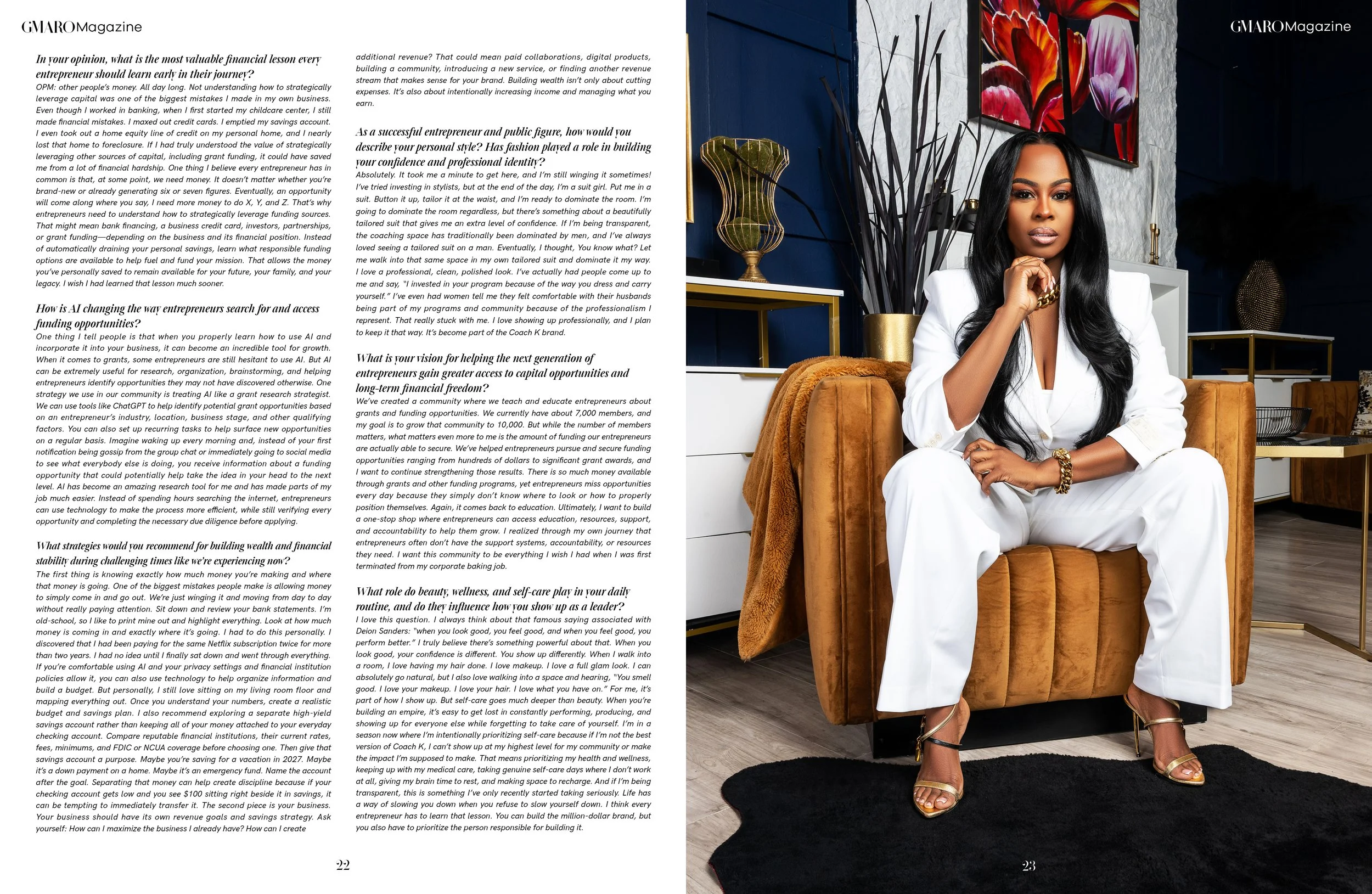
Absolutely. It took me a minute to get here, and I’m still winging it sometimes! I’ve tried investing in stylists, but at the end of the day, I’m a suit girl. Put me in a suit. Button it up, tailor it at the waist, and I’m ready to dominate the room. I’m going to dominate the room regardless, but there’s something about a beautifully tailored suit that gives me an extra level of confidence. If I’m being transparent, the coaching space has traditionally been dominated by men, and I’ve always loved seeing a tailored suit on a man. Eventually, I thought, You know what? Let me walk into that same space in my own tailored suit and dominate it my way. I love a professional, clean, polished look. I’ve actually had people come up to me and say, “I invested in your program because of the way you dress and carry yourself.” I’ve even had women tell me they felt comfortable with their husbands being part of my programs and community because of the professionalism I represent. That really stuck with me. I love showing up professionally, and I plan to keep it that way. It’s become part of the Coach K brand.
What is your vision for helping the next generation of entrepreneurs gain greater access to capital opportunities and long-term financial freedom?
We’ve created a community where we teach and educate entrepreneurs about grants and funding opportunities. We currently have about 7,000 members, and my goal is to grow that community to 10,000. But while the number of members matters, what matters even more to me is the amount of funding our entrepreneurs are actually able to secure. We’ve helped entrepreneurs pursue and secure funding opportunities ranging from hundreds of dollars to significant grant awards, and I want to continue strengthening those results. There is so much money available through grants and other funding programs, yet entrepreneurs miss opportunities every day because they simply don’t know where to look or how to properly position themselves. Again, it comes back to education. Ultimately, I want to build a one-stop shop where entrepreneurs can access education, resources, support, and accountability to help them grow. I realized through my own journey that entrepreneurs often don’t have the support systems, accountability, or resources they need. I want this community to be everything I wish I had when I was first terminated from my corporate baking job.
What role do beauty, wellness, and self-care play in your daily routine, and do they influence how you show up as a leader?
I love this question. I always think about that famous saying associated with Deion Sanders: “when you look good, you feel good, and when you feel good, you perform better.” I truly believe there’s something powerful about that. When you look good, your confidence is different. You show up differently. When I walk into a room, I love having my hair done. I love makeup. I love a full glam look. I can absolutely go natural, but I also love walking into a space and hearing, “You smell good. I love your makeup. I love your hair. I love what you have on.” For me, it’s part of how I show up. But self-care goes much deeper than beauty. When you’re building an empire, it’s easy to get lost in constantly performing, producing, and showing up for everyone else while forgetting to take care of yourself. I’m in a season now where I’m intentionally prioritizing self-care because if I’m not the best version of Coach K, I can’t show up at my highest level for my community or make the impact I’m supposed to make. That means prioritizing my health and wellness, keeping up with my medical care, taking genuine self-care days where I don’t work at all, giving my brain time to rest, and making space to recharge. And if I’m being transparent, this is something I’ve only recently started taking seriously. Life has a way of slowing you down when you refuse to slow yourself down. I think every entrepreneur has to learn that lesson. You can build the million-dollar brand, but you also have to prioritize the person responsible for building it.